


Introduction
Animals share our planet with us in countless ways. Some live in our homes as beloved companions, while others live in forests, oceans, mountains, grasslands, and urban environments. They are an important part of nature and play valuable roles in ecosystems around the world. World Animal Day 2026 is an opportunity to recognize their importance, learn more about animal welfare, and think about how our everyday choices affect animals.
Also Read: National Techies Day 2026: Date, History, Meaning, Facts, and Ways to Celebrate
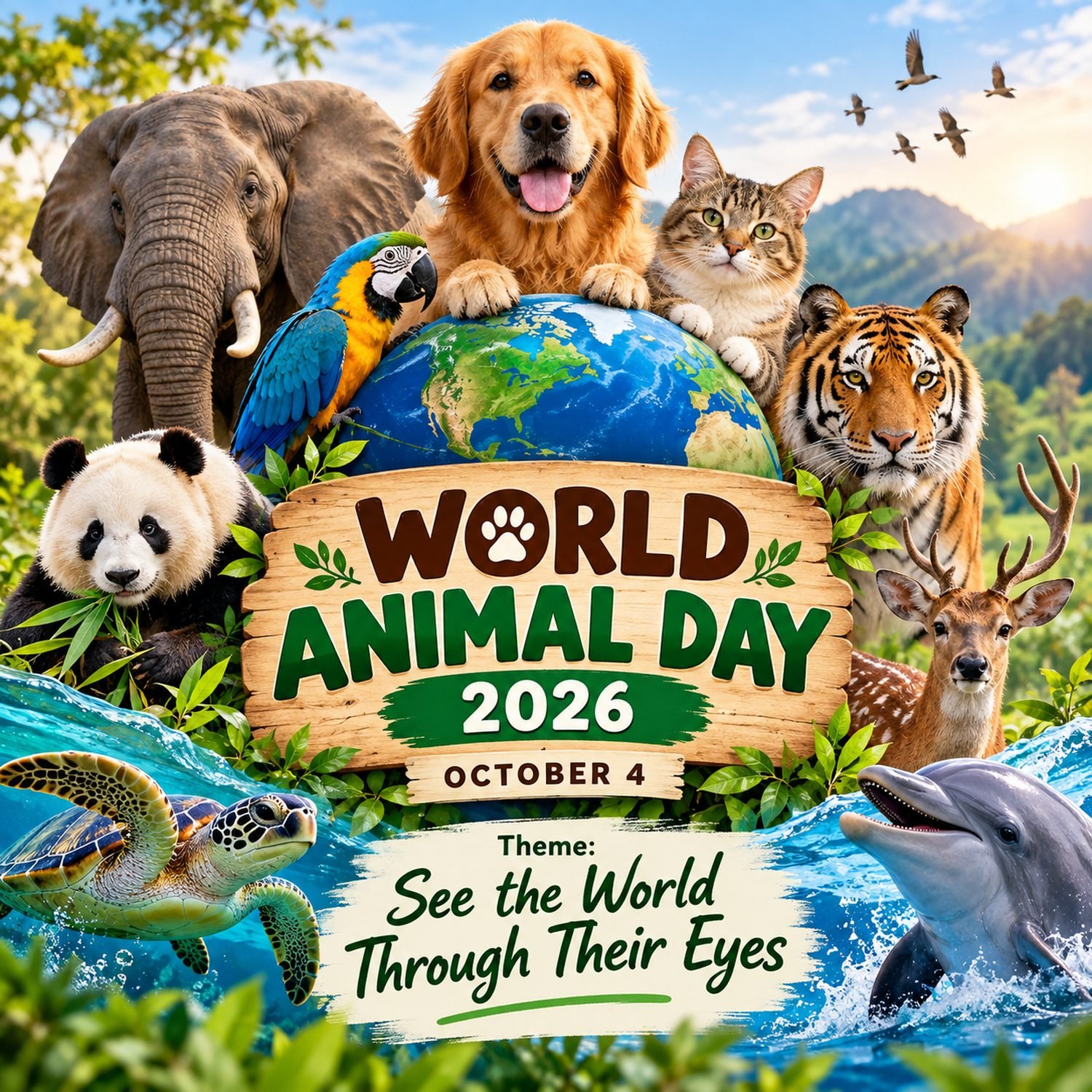
Observed every year on October 4, World Animal Day brings people together to raise awareness about animal welfare and encourage more responsible and compassionate treatment of animals. The official theme for World Animal Day 2026 is “See the World Through Their Eyes.” The theme encourages people to look beyond a human-centered perspective and consider how animals experience the world and how human decisions can affect them.
Whether you are a pet owner, student, teacher, wildlife enthusiast, or simply someone who cares about animals, October 4 can be a meaningful day to learn, participate, and take practical action.
When Is World Animal Day 2026?
World Animal Day 2026 will be observed on Sunday, October 4, 2026.
Here are the important details:
- Event: World Animal Day
- Date: October 4, 2026
- Day: Sunday
- Theme: “See the World Through Their Eyes”
- Purpose: To raise awareness about animal welfare and encourage responsible action for animals
World Animal Day is intended for all animals, not just household pets. People around the world can participate through educational programs, community events, fundraising activities, volunteering, social media campaigns, and simple everyday acts of responsible animal care.
What Is World Animal Day?
World Animal Day is an international observance dedicated to raising the status of animals and improving animal welfare standards around the world.
The day provides an opportunity to talk about how animals are treated and the responsibilities humans have toward them. It also brings attention to animals that may receive less public attention, including wildlife, farm animals, marine animals, birds, and community animals.
The purpose is not simply to celebrate animals for one day. It is also about encouraging people to understand animal welfare issues and consider practical ways to improve the lives of animals.
According to the World Animal Day organization, the observance brings together individuals, schools, clubs, communities, organizations, and animal lovers to raise awareness and encourage action for animals.
What Is the World Animal Day 2026 Theme?
The official theme of World Animal Day 2026 is “See the World Through Their Eyes.”
The theme asks people to pause and think about the world from an animal’s perspective. Human beings make decisions every day about homes, roads, cities, agriculture, transportation, food production, waste, energy, and natural resources. These decisions can also affect animals.
What Does “See the World Through Their Eyes” Mean?
The theme encourages a change in perspective.
For example, when people build roads or expand cities, they may think primarily about transportation and development. However, the same changes can affect animal habitats and movement. Pollution that appears manageable to humans can have serious consequences for animals living in affected environments.
The theme also applies to domestic animals. A pet cannot explain in human language when it is uncomfortable, frightened, hungry, or unwell. Responsible owners therefore need to understand animal behavior and provide suitable care.
The 2026 theme was selected after a public call for ideas, and the official campaign explains that it encourages people to consider the effects of human activity and a changing climate from the perspective of animals.
History of World Animal Day
World Animal Day has a history stretching back to the early 20th century.
The idea is closely associated with Heinrich Zimmermann, a writer, publisher, and animal welfare advocate who worked in Berlin. He organized the first World Animal Day celebration at the Berlin Sports Palace on March 24, 1925, with more than 5,000 people attending.
Zimmermann originally wanted the event to take place on October 4 in honor of St. Francis of Assisi, but logistical difficulties meant the first event was held in March. In 1929, the celebration was moved to October 4. In May 1931, organizations participating in an international animal protection congress in Florence approved October 4 as the date for World Animal Day.
Over time, the observance developed into an international platform for raising awareness about animal welfare and encouraging people to take action.
For More Information Read Here…
Why Is World Animal Day Celebrated on October 4?
October 4 is associated with St. Francis of Assisi, who is traditionally recognized as a patron of animals and nature.
The connection gives the date a long-standing association with compassion toward animals and respect for the natural world. Today, World Animal Day is a broad international animal welfare observance that people of different backgrounds can participate in.
The date also provides a regular opportunity for organizations, schools, communities, and individuals to focus public attention on animal welfare every year.
Why Is World Animal Day Important?
World Animal Day is important because animals are affected by human decisions in many different ways.
Pets depend on people for food, shelter, healthcare, safety, and companionship. Wild animals depend on healthy ecosystems and suitable habitats. Community animals interact closely with people in towns and cities. Farm animals are also affected by how they are housed, handled, transported, and cared for.
Promoting Compassion and Respect
World Animal Day encourages people to consider animals as living beings with their own needs. Learning to interact with animals respectfully can help reduce unnecessary harm and promote more responsible behavior.
Raising Awareness About Animal Welfare
Animal welfare covers much more than preventing cruelty. It also includes appropriate nutrition, shelter, healthcare, safety, behavioral needs, and suitable living conditions.
Encouraging Responsible Pet Ownership
Pets are a long-term responsibility. World Animal Day can remind people to think carefully before adopting or purchasing an animal and to understand the commitment involved.
Supporting Wildlife Conservation
Wild animals need healthy habitats to survive. Protecting forests, wetlands, oceans, grasslands, and other ecosystems can help protect many species at the same time.
Major Animal Welfare Issues Around the World
Animals face different challenges depending on where they live and how they interact with humans.
Animal Cruelty and Abuse
Deliberately hurting animals is an important animal welfare concern. Education, responsible ownership, appropriate laws, and reporting suspected cruelty through proper channels can all play a role in protecting animals.
Neglect and Abandonment
Animals can suffer when they do not receive adequate food, water, shelter, medical attention, or protection. Abandoning pets can also expose them to traffic, disease, hunger, and other dangers.
Habitat Destruction
Wild animals require suitable habitats for food, shelter, reproduction, and movement. Deforestation, construction, agricultural expansion, and other land-use changes can reduce or fragment habitats.
Pollution
Plastic waste, contaminated water, chemicals, air pollution, and other forms of environmental pollution can affect animals directly or damage the ecosystems they depend on.
Illegal Wildlife Trade
Illegal wildlife trafficking can threaten animal populations and disrupt natural ecosystems. Learning about responsible wildlife conservation can help people understand why wild animals should remain in suitable natural environments.
Environmental and Climate Changes
Changes in temperature, rainfall, sea conditions, and habitats can affect animals in different ways. The 2026 theme specifically encourages people to consider animals when thinking about the consequences of human activity and environmental change.
World Animal Day and Wildlife Conservation
Wildlife conservation is an important part of animal protection.
Every species contributes to its ecosystem in some way. Birds, insects, mammals, reptiles, amphibians, fish, and other animals can all play roles in pollination, seed dispersal, food chains, nutrient cycles, and ecosystem balance.
Protecting animals therefore often means protecting their habitats.
People can contribute by reducing litter, avoiding illegal wildlife products, respecting protected areas, learning about local wildlife, and supporting credible conservation efforts.
Wildlife should also be observed responsibly. Getting too close, chasing animals, touching them, feeding them, or interfering with nests and habitats can cause unnecessary stress or harm.
World Animal Day and Responsible Pet Ownership
For many people, pets are part of the family. However, responsible pet ownership requires more than affection.
Provide Proper Food and Clean Water
Pets need suitable nutrition and regular access to clean drinking water. Their dietary requirements can vary depending on their species, age, size, and health.
Provide Appropriate Veterinary Care
Regular veterinary attention can help identify health problems and maintain an animal’s well-being.
Create a Safe Living Environment
Pets need clean, secure, and comfortable spaces that meet their physical and behavioral needs.
Provide Exercise and Enrichment
Many animals need regular exercise, play, exploration, and mental stimulation. Meeting these needs can contribute to healthier and more balanced lives.
Never Abandon a Pet
Before adopting an animal, people should consider the financial, emotional, and time commitments involved. A pet should be viewed as a long-term responsibility rather than a temporary decision.
How to Celebrate World Animal Day 2026
There are many ways to celebrate World Animal Day without spending a lot of money.
1. Volunteer With an Animal Welfare Organization
Ask local shelters, rescue groups, or animal welfare organizations about appropriate volunteering opportunities.
2. Donate Responsibly
You can donate food, supplies, money, or other useful resources to a reputable organization that supports animals.
3. Learn About an Animal Species
Choose an animal and learn about its habitat, diet, behavior, threats, and conservation needs.
4. Organize an Awareness Event
Schools, communities, clubs, and workplaces can organize talks, quizzes, poster competitions, exhibitions, or educational sessions.
5. Support Animals in Your Community
If your community has animals in need, consider working with established local organizations and following appropriate animal welfare guidance.
6. Share Educational Information
Use social media to spread reliable information about animal welfare, responsible pet ownership, and wildlife conservation.
7. Spend Time Caring for Your Pet
For pet owners, World Animal Day can be a reminder to review their pet’s needs and spend meaningful time with them.
World Animal Day 2026 Activities for Schools
Schools can turn World Animal Day into a fun and educational learning experience.
Teachers can organize:
- Animal drawing competitions
- Wildlife poster-making competitions
- Animal-themed quizzes
- Essay-writing activities
- Storytelling sessions
- Endangered-species research projects
- Classroom presentations
- Animal welfare awareness boards
- Wildlife documentaries followed by discussions
- Responsible pet-care activities
Students can also choose an animal and create a short presentation explaining where it lives, what it eats, what threats it faces, and how people can help protect it.
These activities can help children develop curiosity about nature while teaching them that caring for animals involves knowledge, responsibility, and respect.
How Can Families Celebrate World Animal Day?
Families can celebrate in simple ways.
Parents can encourage children to read about animals, watch educational wildlife programs, draw animal pictures, or learn about species found in their local area.
Families with pets can use the day to review their animals’ food, water, shelter, exercise, safety, and healthcare needs.
Families can also discuss why wild animals should be observed from a safe distance and why people should avoid disturbing wildlife simply for photographs or entertainment.
How Can We Help Animals Every Day?
World Animal Day is only one day, but responsible treatment of animals can continue throughout the year.
Treat Animals With Respect
Avoid deliberately frightening, hurting, chasing, or disturbing animals.
Protect the Environment
Reduce litter, dispose of waste responsibly, and make environmentally conscious choices that can help protect animal habitats.
Respect Wildlife
Observe wild animals from a safe distance and avoid touching, capturing, chasing, or feeding them without appropriate guidance.
Support Responsible Organizations
If you choose to donate or volunteer, research organizations carefully and consider their transparency, experience, and stated animal welfare work.
Educate Others
Sharing accurate information with friends, family, students, and community members can help create greater awareness about responsible animal care.
World Animal Day 2026 in India
World Animal Day is also relevant to communities across India, where people live alongside a wide variety of domestic animals, community animals, birds, and wildlife.
Schools, colleges, animal welfare groups, communities, and individuals can use October 4 to organize educational programs and awareness activities.
People can learn more about local wildlife, responsible pet ownership, community-animal welfare, habitat protection, and the importance of biodiversity.
There are already World Animal Day events listed for October 4, 2026, including animal welfare awareness and health-related activities in India, demonstrating the range of ways communities can participate.
How to Observe World Animal Day Responsibly
Good intentions should always be combined with responsible action.
Do not disturb wild animals to create photographs or videos. Avoid attempting to handle injured wildlife yourself unless you have appropriate expertise. Instead, contact qualified wildlife or animal rescue professionals when assistance is required.
Similarly, adopting an animal should not be an impulsive World Animal Day activity. Before adopting, consider the animal’s lifelong needs, your living environment, available time, financial resources, and ability to provide proper care.
The most meaningful celebration is one that creates positive and sustainable change rather than attention for just one day.
World Animal Day 2026 Messages
You can use short, original messages to spread awareness on social media or in school activities:
- “See the world through their eyes and choose kindness.”
- “Every animal deserves care, respect, and compassion.”
- “Protect animals today and help preserve our shared planet.”
- “Kindness toward animals begins with responsible choices.”
- “Animals share our world, and protecting them is a shared responsibility.”
- “This World Animal Day, learn more, care more, and act responsibly.”
World Animal Day 2026 Social Media Ideas
Social media can help spread educational messages to a wider audience. The World Animal Day organization itself encourages supporters to use online platforms and also emphasizes going beyond hashtags by organizing real-world or virtual activities.
You can create:
- A post explaining the 2026 theme
- An animal welfare infographic
- A short video about responsible pet ownership
- A wildlife conservation carousel
- An endangered-animal facts post
- A school awareness poster
- A World Animal Day quote graphic
- A short educational Reel
Useful hashtags include:
#WorldAnimalDay #WorldAnimalDay2026 #AnimalWelfare #AnimalProtection #ProtectWildlife #LoveAnimals #SaveAnimals #WildlifeConservation #AnimalCare
Frequently Asked Questions About World Animal Day 2026
What is World Animal Day 2026?
World Animal Day 2026 is an international observance focused on raising awareness about animal welfare and encouraging people to treat animals responsibly and humanely.
When is World Animal Day 2026?
World Animal Day 2026 will be observed on Sunday, October 4, 2026.
What is the theme of World Animal Day 2026?
The official theme is “See the World Through Their Eyes.” It encourages people to consider the effects of human decisions and environmental changes from the perspective of animals.
Why is World Animal Day celebrated on October 4?
October 4 is associated with St. Francis of Assisi, traditionally regarded as a patron of animals and nature. The date was formally established as World Animal Day in 1931 following an international animal protection congress in Florence.
Who started World Animal Day?
The first World Animal Day celebration was organized by Heinrich Zimmermann in Berlin in 1925. The first event was held on March 24, while October 4 became the established date later.
How can students celebrate World Animal Day 2026?
Students can take part in animal quizzes, poster competitions, drawing activities, essays, presentations, wildlife research projects, and school awareness campaigns.
How can I help animals on World Animal Day?
You can help by caring responsibly for pets, learning about wildlife, supporting reputable animal welfare organizations, reducing pollution, respecting wild animals, volunteering where appropriate, and sharing accurate information.
Is World Animal Day only for pets?
No. World Animal Day is for all animals, including pets, wildlife, farm animals, birds, marine animals, and other animals affected by human activities.
Conclusion
World Animal Day 2026 will be observed on October 4, giving people around the world an opportunity to think about animal welfare and the relationship between humans and animals. This year’s theme, “See the World Through Their Eyes,” encourages us to look at our surroundings from a different perspective and consider how our choices can affect animals.
Celebrating World Animal Day does not require a large event or expensive activity. Learning about animals, caring responsibly for pets, respecting wildlife, protecting natural habitats, reducing pollution, supporting credible organizations, and educating others are all meaningful ways to participate.
Most importantly, the message of World Animal Day should continue beyond October 4. When people make thoughtful and responsible choices throughout the year, awareness can become action.
By seeing the world through their eyes, we can better understand the animals with whom we share our planet and work toward a future where they are treated with greater care, respect, and compassion.