


Introduction
Every year on October 2, people around the world observe International Day of Non-Violence, a day dedicated to promoting peace, tolerance, understanding and peaceful ways of resolving conflicts. The date is especially important because it marks the birth anniversary of Mahatma Gandhi, one of the world’s most recognized figures associated with non-violence.
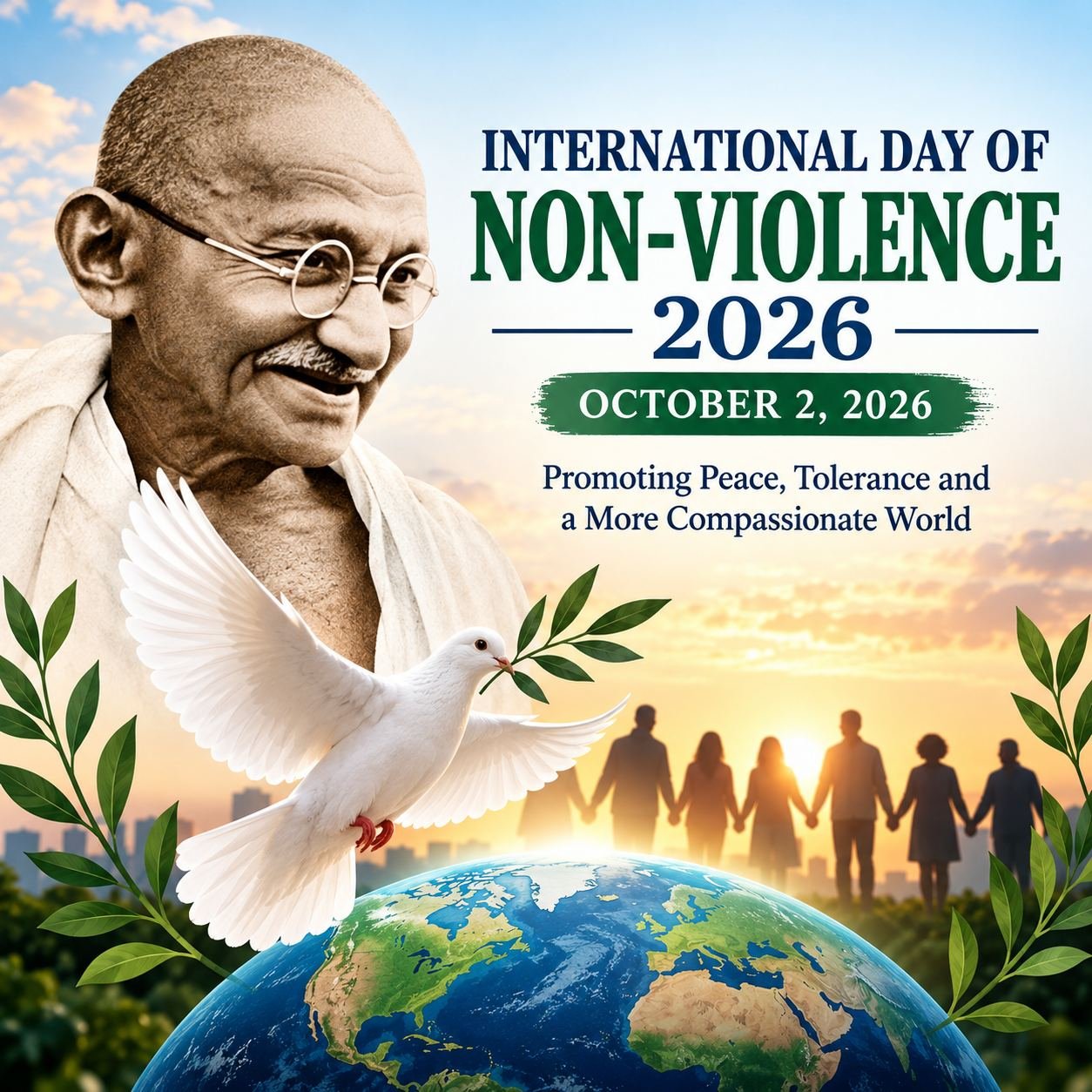
International Day of Non-Violence 2026 will be observed on Friday, October 2, 2026. The day provides an opportunity to learn about Gandhi’s philosophy, understand the meaning of non-violence and think about how peaceful actions can make a positive difference in everyday life.
Also Read: National Body Language Day 2026: Date, History, Meaning, Celebration Ideas, and Facts
Non-violence is not only about avoiding physical conflict. It can also involve respectful communication, empathy, patience, understanding and choosing peaceful solutions when disagreements occur.
In today’s world, where arguments can quickly become hostile both offline and online, the message of International Day of Non-Violence remains relevant to individuals, families, schools, workplaces and communities.
When Is International Day of Non-Violence 2026?
International Day of Non-Violence 2026 will be observed on Friday, October 2, 2026.
The day is observed every year on October 2, the birth anniversary of Mahatma Gandhi. The United Nations established the International Day of Non-Violence in 2007 to promote awareness of non-violence through education and public awareness.
October 2 is therefore an important date for both India and the international community. In India, the day is celebrated as Gandhi Jayanti, while internationally it is recognized as the International Day of Non-Violence.
What Is International Day of Non-Violence?
International Day of Non-Violence is an annual observance that encourages people to understand and promote peaceful approaches to conflicts and social challenges.
The basic idea is simple: disagreements do not always have to be answered with anger, aggression or violence. Dialogue, understanding, cooperation and peaceful action can provide constructive ways to address difficult situations.
The day also highlights values such as:
- Peace
- Tolerance
- Respect
- Understanding
- Human dignity
- Cooperation
- Empathy
- Responsible communication
It is especially meaningful for students because schools can use the occasion to teach young people about peaceful communication, kindness, conflict resolution and respect for different perspectives.
History of International Day of Non-Violence
The history of International Day of Non-Violence is closely connected with Mahatma Gandhi and his philosophy of peaceful resistance.
The United Nations General Assembly established October 2 as the International Day of Non-Violence in 2007. The observance was created to spread the message of non-violence through education and public awareness.
The decision also recognized the wider importance of peaceful approaches to conflict and social change.
Since then, October 2 has become an opportunity for schools, organizations, communities and individuals to organize discussions, educational programs, cultural activities and awareness campaigns focused on peace and non-violence.
Why Is October 2 Important?
October 2 is significant because it is the birth anniversary of Mahatma Gandhi.
Gandhi was born on October 2, 1869, in Porbandar, India. He later became one of the most important leaders of India’s independence movement.
His approach emphasized truth, non-violence and peaceful resistance. During the independence movement, Gandhi encouraged people to participate in campaigns that relied on non-cooperation, civil disobedience and other forms of peaceful action.
His philosophy and methods later became an important subject of discussion around the world.
Because of this historical connection, October 2 was selected as the date for the International Day of Non-Violence.
Mahatma Gandhi and Non-Violence
Mahatma Gandhi is strongly associated with the concept of Ahimsa, commonly understood as non-violence or non-harming.
For Gandhi, non-violence was not simply about refusing to fight. It was connected with truth, courage, self-discipline and peaceful resistance.
During India’s independence movement, Gandhi supported organized forms of non-violent action. One well-known example was the Salt March of 1930, which challenged British colonial salt laws through peaceful resistance.
Gandhi’s approach demonstrated that non-violent action could involve courage, organization and determination.
His ideas continue to be discussed when people study peaceful resistance, social change and methods of resolving conflicts without physical violence.
What Does Non-Violence Mean?
Non-violence generally means rejecting violence as a way of resolving conflicts or achieving change.
In everyday life, the idea can be applied to how we communicate and behave when disagreements occur.
Non-violence can include:
- Listening before responding
- Speaking respectfully
- Avoiding threats and abusive language
- Showing empathy
- Respecting different opinions
- Rejecting bullying
- Solving disagreements through discussion
- Supporting peaceful community action
- Avoiding unnecessary confrontation
- Treating others with dignity
This makes non-violence relevant not only to major social issues but also to ordinary situations at home, school, work and online.
Why Is International Day of Non-Violence Important?
International Day of Non-Violence is important because it encourages people to think about how conflicts are handled and how peaceful behavior can contribute to healthier communities.
1. It Promotes Peace
The day encourages people to consider peaceful ways of dealing with disagreements and conflicts.
2. It Encourages Tolerance
People have different opinions, cultures and experiences. Learning to respect these differences can help create more tolerant communities.
3. It Promotes Understanding
Listening to others and trying to understand their perspectives can reduce misunderstandings and unnecessary conflict.
4. It Raises Awareness
The observance gives schools, organizations and communities an opportunity to discuss the importance of non-violence.
5. It Highlights Gandhi’s Legacy
October 2 provides an opportunity to learn about Gandhi’s life and his approach to peaceful resistance.
6. It Encourages Respectful Communication
The principles of non-violence can be applied to conversations with family members, classmates, colleagues and people online.
International Day of Non-Violence 2026 Theme
The 2026 observance places attention on Mahatma Gandhi’s legacy and the continuing importance of dialogue, diplomacy, empathy, dignity and shared humanity.
The message surrounding International Day of Non-Violence 2026 encourages people to consider peaceful approaches when dealing with division and conflict.
The theme of non-violence is not limited to historical events. It can also be connected with modern challenges, including social divisions, disagreements, intolerance, bullying and hostile communication.
For individuals, the message is simple: peaceful change can begin with the way we communicate and treat other people.
International Day of Non-Violence and Gandhi Jayanti
International Day of Non-Violence and Gandhi Jayanti are different observances that share the same date.
Gandhi Jayanti is observed in India on October 2 to commemorate Mahatma Gandhi’s birth anniversary.
International Day of Non-Violence is a United Nations observance held on the same date to promote the message of non-violence internationally.
This connection makes October 2 especially significant in India while also giving the date international importance.
How Is International Day of Non-Violence Celebrated?
There is no single way to observe International Day of Non-Violence. Schools, organizations and communities can choose activities that promote peace and awareness.
Some common activities include:
- Gandhi Jayanti programs
- Peace marches
- School assemblies
- Essay-writing competitions
- Speech competitions
- Poster-making competitions
- Peace seminars
- Classroom discussions
- Cultural programs
- Awareness campaigns
- Community activities
- Acts of kindness
- Social-media campaigns
The main purpose is to encourage people to understand the value of peaceful behavior and apply it in their daily lives.
International Day of Non-Violence Activities for Students
Schools can make October 2 educational and engaging by organizing activities that allow students to explore the meaning of peace and non-violence.
Essay Writing
Students can write essays on topics such as “Importance of Non-Violence in Our Lives”, “Mahatma Gandhi and Peace” or “How Students Can Promote Non-Violence.”
Poster Making
Students can create posters featuring messages about peace, kindness, tolerance and cooperation.
Speech Competition
Students can deliver short speeches about Gandhi, Ahimsa and the importance of peaceful communication.
Peace Pledge
Schools can organize a simple pledge encouraging students to avoid bullying, respect others and resolve disagreements peacefully.
Role-Playing Activities
Teachers can provide everyday conflict situations and ask students to demonstrate peaceful ways of solving them.
Classroom Discussions
Teachers can ask students how they can practice non-violence at school, at home and on social media.
How Can We Practice Non-Violence in Daily Life?
Non-violence should not be limited to one day. There are many simple ways to practice peaceful behavior every day.
Listen Before Responding
Listening carefully can prevent misunderstandings and help people feel respected.
Choose Your Words Carefully
Insults, threats and abusive language can make disagreements worse. Respectful communication can help keep conversations constructive.
Respect Different Opinions
People will not always agree. Respecting someone’s opinion does not mean that you must agree with it.
Avoid Bullying
Refusing to bully others and supporting people who experience bullying are practical ways to promote a peaceful environment.
Practice Empathy
Try to understand another person’s feelings or situation before judging them.
Use Dialogue to Solve Problems
When possible, a calm conversation can help people understand each other and find a solution.
Use Social Media Responsibly
Online discussions can become aggressive quickly. Avoiding harassment, insults and unnecessary personal attacks can help create healthier digital spaces.
Role of Education in Promoting Non-Violence
Education plays an important role in developing peaceful communities.
Schools teach much more than academic subjects. They also help children develop communication, cooperation and social skills.
Teachers can encourage students to:
- Listen to one another
- Respect differences
- Cooperate with classmates
- Solve disagreements peacefully
- Avoid bullying
- Express their feelings appropriately
- Understand different perspectives
- Take responsibility for their actions
These lessons can help students develop habits that remain useful throughout their lives.
Role of Families and Communities
The principles of non-violence can also begin at home.
Parents and family members can teach children how to communicate respectfully during disagreements. Instead of encouraging shouting or insults, families can create an environment where problems can be discussed calmly.
Communities can also organize educational programs, discussions and cultural activities that bring people together.
When people from different backgrounds interact respectfully, they have more opportunities to understand one another and build stronger relationships.
Non-Violence Does Not Mean Passivity
One common misunderstanding is that non-violence means remaining silent or doing nothing when something is wrong.
Non-violent action can involve actively addressing problems through peaceful methods.
Gandhi’s campaigns demonstrate this distinction. His approach included organized resistance, non-cooperation and civil disobedience.
Therefore, non-violence can require courage and determination. A person can strongly disagree with something while still choosing peaceful methods to express that disagreement.
Why Should Young People Learn About Non-Violence?
Young people interact with many different opinions and cultures at school, online and in their communities.
Learning about non-violence can help them develop important skills such as:
- Empathy
- Patience
- Communication
- Cooperation
- Respect
- Conflict resolution
- Responsible digital behavior
These skills can help young people handle disagreements more constructively and develop healthier relationships.
International Day of Non-Violence and Social Media
Social media can be a useful way to spread awareness about International Day of Non-Violence.
People can share:
- Peace messages
- Educational posts
- Gandhi quotes
- Infographics
- Short videos
- Student artwork
- Historical information
- Awareness posters
- Personal reflections
However, social-media campaigns should reflect the values of the day. Content should encourage respectful discussion instead of creating more hostility.
10 Simple Ways to Celebrate International Day of Non-Violence 2026
You do not need to organize a large event to observe the day. Simple actions can also be meaningful.
- Learn about Mahatma Gandhi and his philosophy.
- Read about the history of non-violent movements.
- Share a positive message about peace.
- Participate in a school or community event.
- Create a poster about non-violence.
- Discuss peaceful conflict resolution with others.
- Practice listening without interrupting.
- Avoid unnecessary arguments online.
- Perform an act of kindness.
- Encourage respectful communication in your community.
International Day of Non-Violence 2026 FAQs
When is International Day of Non-Violence 2026?
International Day of Non-Violence 2026 will be observed on Friday, October 2, 2026.
Why is International Day of Non-Violence celebrated?
The day is observed to spread awareness about non-violence and encourage peace, tolerance, understanding and peaceful ways of resolving conflicts.
Why is International Day of Non-Violence celebrated on October 2?
October 2 is the birth anniversary of Mahatma Gandhi, who is widely associated with non-violence and peaceful resistance.
Who established International Day of Non-Violence?
The United Nations General Assembly established the International Day of Non-Violence in 2007.
What is the main message of International Day of Non-Violence?
The main message is to encourage peaceful approaches to conflict, dialogue, understanding, respect and a culture of non-violence.
What is the connection between Gandhi and non-violence?
Gandhi made non-violent resistance an important part of his approach to India’s independence movement. His ideas later influenced discussions about peaceful social and political change.
What does Ahimsa mean?
Ahimsa is commonly understood as non-violence or non-harming. It is an important concept associated with Gandhi’s philosophy.
How can students celebrate International Day of Non-Violence?
Students can participate in essay competitions, poster-making, speeches, peace pledges, classroom discussions, role-playing activities and other educational programs.
How can we practice non-violence every day?
We can practice non-violence by communicating respectfully, listening to others, avoiding bullying and harassment, respecting differences and finding peaceful ways to resolve disagreements.
Is International Day of Non-Violence the same as Gandhi Jayanti?
They are different observances held on the same date. Gandhi Jayanti commemorates Mahatma Gandhi’s birth anniversary in India, while International Day of Non-Violence is the international observance promoting awareness of non-violence.
Conclusion
International Day of Non-Violence 2026 will be observed on October 2, 2026, offering an opportunity to reflect on peace, understanding and peaceful action.
The day is closely connected with Mahatma Gandhi, whose philosophy of non-violence became an important part of India’s independence movement and influenced discussions about peaceful resistance around the world.
However, non-violence is not only a historical concept. It can be practiced in everyday life through respectful communication, empathy, patience and peaceful conflict resolution.
People may always have different opinions and perspectives, but the way we respond to those differences matters.
Choosing dialogue instead of unnecessary hostility, understanding instead of hatred and peaceful action instead of violence can help create a more respectful environment.
As International Day of Non-Violence 2026 approaches, October 2 can serve as a reminder that peaceful change begins with everyday choices. By listening to others, respecting differences and treating people with dignity, each person can contribute to a culture of peace and understanding.