


Introduction
Fire Prevention Week 2026 is an important annual observance that reminds families, schools, workplaces, and communities that preventing fires begins with everyday safety habits. A few simple precautions can help reduce fire risks, protect property, and give people a better chance of responding safely during an emergency.
Also Read: Mental Illness Awareness Week 2026: Dates, Theme, History, Importance & Ways to Observe
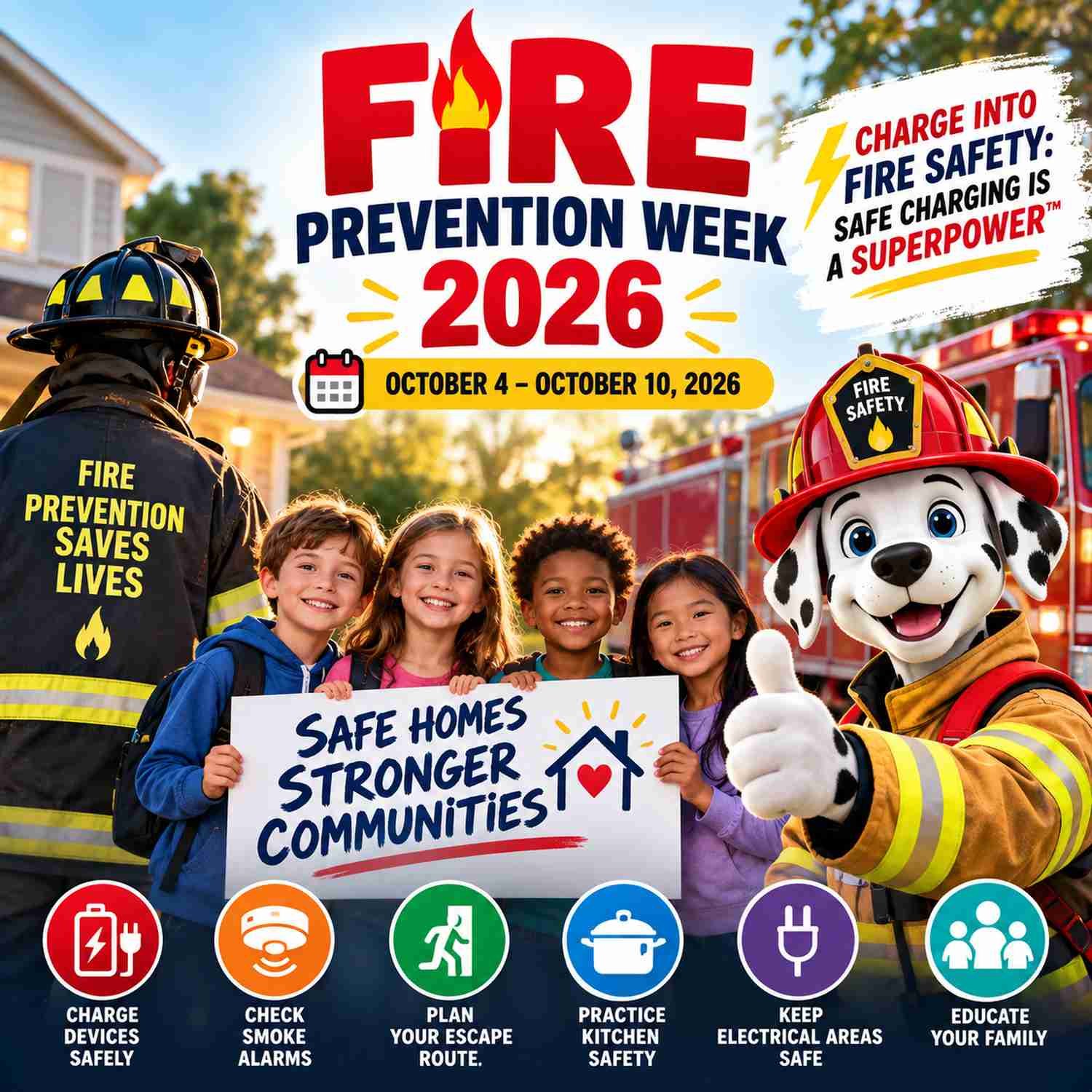
In 2026, Fire Prevention Week will be observed from October 4 through October 10. The official theme for Fire Prevention Week 2026 is “Charge into Fire Safety: Safe Charging is a Superpower™.” The campaign places special attention on the safe charging and use of products powered by lithium-ion batteries.
Rechargeable technology is now part of everyday life. Smartphones, laptops, tablets, power banks, e-bikes, e-scooters, cordless tools, and many other devices depend on rechargeable batteries. That makes safe charging an increasingly important part of modern fire prevention.
Fire Prevention Week 2026 is an ideal time to check your home’s fire-safety habits, review your emergency plan, test smoke alarms, and learn how to charge battery-powered devices more safely.
What Is Fire Prevention Week?
Fire Prevention Week is an annual public safety observance dedicated to fire prevention education and awareness. During this week, fire departments, schools, community organizations, families, and safety professionals encourage people to understand fire hazards and learn what they can do to prevent fires.
The National Fire Protection Association (NFPA) has sponsored Fire Prevention Week since 1922. In 1925, President Calvin Coolidge proclaimed the first National Fire Prevention Week.
The observance has continued to evolve as new fire risks have emerged. While traditional topics such as cooking, electrical safety, smoke alarms, and home escape plans remain important, modern campaigns also address risks associated with rechargeable batteries and newer technologies.
Fire Prevention Week is therefore not only about learning what to do after a fire starts. Its main message is that prevention and preparation should happen before an emergency occurs.
When Is Fire Prevention Week 2026?
Fire Prevention Week 2026 will take place from October 4 to October 10, 2026.
Fire Prevention Week is traditionally observed during the week that includes October 9. The observance is connected with the Great Chicago Fire of 1871, which began on October 8 and continued into October 10.
The annual observance provides a convenient opportunity for people to spend time learning about fire safety, reviewing emergency plans, and identifying potential hazards around their homes, schools, and workplaces.
What Is the Fire Prevention Week 2026 Theme?
The official theme for Fire Prevention Week 2026 is:
“Charge into Fire Safety: Safe Charging is a Superpower™.”
The theme focuses on safe charging practices for products powered by lithium-ion batteries. It encourages people to think carefully about where and how they charge rechargeable devices and to pay attention to signs that a battery or device may not be operating safely.
The theme is especially relevant because rechargeable products have become common in homes, offices, schools, and transportation.
From charging a smartphone overnight to using an e-bike or cordless power tool, battery-powered technology is part of many people’s daily routines. Understanding safe charging practices can therefore become an important everyday fire-prevention habit.
What Does the 2026 Fire Prevention Week Theme Mean?
The message behind the 2026 theme is straightforward: safe charging is an important part of fire prevention.
People should follow the manufacturer’s instructions for charging, use appropriate charging equipment, and avoid placing charging devices in locations where heat can build up or where a potential problem could block an escape route.
It is also important to pay attention to warning signs. A rechargeable battery that becomes unusually hot, swollen, damaged, or otherwise abnormal should not simply be ignored.
The goal of the campaign is not to discourage people from using rechargeable technology. Instead, it encourages responsible use so that people can enjoy the benefits of modern devices while paying attention to basic safety.
Why Is Fire Prevention Week Important?
Fire can spread quickly, and an emergency can become dangerous before people have enough time to think through what to do. Preparation can make a significant difference.
Fire Prevention Week encourages people to identify potential hazards before they become emergencies. It also gives families an opportunity to discuss what everyone should do if a fire occurs.
Some important reasons Fire Prevention Week matters include:
- It increases awareness of common fire hazards.
- It encourages safer habits at home.
- It promotes smoke-alarm awareness.
- It encourages families to create fire escape plans.
- It teaches children basic fire safety.
- It highlights new risks associated with modern technology.
- It encourages communities to discuss emergency preparedness.
- It provides an opportunity to review workplace safety procedures.
The most useful fire-safety lessons are those that people continue practicing after Fire Prevention Week ends.
History of Fire Prevention Week
The history of Fire Prevention Week is closely associated with the Great Chicago Fire of 1871.
The Great Chicago Fire began on October 8, 1871, and caused widespread destruction. The event became an important part of American fire history and helped draw attention to the need for better fire prevention and preparedness.
Over time, the anniversary period became associated with public fire-safety education. The National Fire Protection Association began sponsoring Fire Prevention Week in 1922.
In 1925, President Calvin Coolidge proclaimed the first National Fire Prevention Week. Since then, the observance has become an annual opportunity to educate the public about preventing fires and responding safely to emergencies.
Although the historical connection remains important, the topics covered today reflect modern lifestyles and changing technology.
For More Information Read Here…
Lithium-Ion Battery Safety in 2026
Lithium-ion batteries are used in a wide range of rechargeable products. They are popular because they can store a considerable amount of energy in relatively compact batteries.
Common products that may use lithium-ion batteries include:
- Smartphones
- Tablets
- Laptops
- Smartwatches
- Wireless headphones
- Power banks
- E-bikes
- E-scooters
- Cordless tools
- Cameras
- Other rechargeable electronics
Because these products are used so frequently, safe charging should become part of normal household safety routines.
Warning signs may include unusual heat, swelling, an unusual smell, smoke, leaking, popping, or hissing. When a device or battery displays concerning signs, stop using it and follow the manufacturer’s safety instructions.
Safe Charging Tips for Fire Prevention Week 2026
1. Use the Correct Charger
Use the charger and cable supplied with the device or equipment whenever possible, or use a replacement specifically approved by the manufacturer.
Avoid using damaged, unsuitable, or questionable charging equipment simply because it fits the device.
2. Charge on a Hard, Stable Surface
Where appropriate, charge devices on a hard and stable surface rather than on beds, pillows, blankets, sofas, or other soft materials.
Soft surfaces can restrict airflow and allow heat to build up around a device.
3. Keep Charging Areas Clear
Do not place charging devices where they could block doors, hallways, stairs, or other important escape routes.
A charging area should also be kept away from materials that can easily catch fire.
4. Watch for Signs of Battery Damage
Pay attention to unusual heat, swelling, leaking, smoke, strange odors, popping, or hissing sounds.
These signs should not be ignored. Stop using a device that appears damaged or is behaving unusually and follow the manufacturer’s instructions.
5. Follow the Manufacturer’s Instructions
Every device may have specific charging, storage, and maintenance instructions. Read the information supplied with the product and follow the manufacturer’s recommendations.
This is especially important for larger battery-powered products such as e-bikes, e-scooters, and power tools.
6. Take Extra Care With Larger Battery Devices
Products containing larger batteries require particular attention. Charge and store them according to the manufacturer’s instructions and keep them away from conditions that could increase the risk of overheating.
Never modify battery packs or charging equipment unless the manufacturer specifically permits it.
Common Causes of Home Fires
Fire prevention involves more than battery safety. Many everyday activities can create fire hazards if they are not handled carefully.
Common areas that deserve attention include:
- Cooking equipment
- Electrical appliances
- Damaged electrical cords
- Heating equipment
- Candles
- Smoking materials
- Rechargeable batteries
- Portable charging devices
- Flammable materials
- Appliances used incorrectly
A useful habit is to regularly walk through your home and look for anything that could potentially cause a fire.
How to Improve Fire Safety at Home
Simple habits can make a home better prepared for a fire emergency.
Keep exits and hallways clear so everyone can leave quickly. Check electrical cords and appliances for visible damage. Keep combustible materials away from heat sources and pay attention while cooking.
Smoke alarms should be installed and maintained according to the manufacturer’s instructions. Everyone in the household should recognize the sound of an alarm and understand that it means they need to respond immediately.
Fire safety should be discussed with children as well as adults. Everyone should know where to go and what to do if a fire occurs.
Create a Home Fire Escape Plan
Every household should have a fire escape plan.
Begin by identifying possible exits from bedrooms and other important areas of the home. Where possible, identify more than one way to leave each area.
Choose a meeting location outside the home where everyone can gather after escaping. The location should be safely away from the building.
Practice the escape plan so that children and adults know what to do without having to make decisions during a stressful emergency.
Most importantly, once you escape from a fire, stay outside and do not go back inside.
Smoke Alarm Safety
Smoke alarms are an important part of home fire protection because they can provide an early warning when smoke is detected.
During Fire Prevention Week 2026, take time to check the smoke alarms in your home.
Test them according to the manufacturer’s instructions and replace batteries or alarms when required. Make sure household members, including children, know what the alarm sounds like.
A smoke alarm should never be treated as something that can simply be installed and forgotten. Regular maintenance is an important part of fire preparedness.
Fire Extinguisher Safety
Fire extinguishers can be useful for certain small fires, but they are not appropriate for every situation.
If a fire is growing, producing significant smoke, or making it difficult to reach an exit, the priority should be getting everyone to safety and contacting emergency services.
Anyone considering using an extinguisher should have a clear escape route and should only attempt to deal with a fire when it is safe and appropriate to do so.
The most important rule is simple: never allow an attempt to fight a fire to put your life or your escape route at risk.
Fire Prevention Week Activities for Families
Fire Prevention Week is a great time for families to turn fire-safety education into practical activities.
Families can:
- Test smoke alarms.
- Review the home escape plan.
- Practice a fire drill.
- Choose an outdoor meeting location.
- Check electrical cords.
- Review kitchen safety.
- Identify safe charging locations.
- Inspect rechargeable devices.
- Discuss emergency procedures with children.
- Create a family fire-safety checklist.
Even a short family discussion can help make fire safety a normal part of everyday life.
Fire Prevention Week Activities for Schools
Schools can make Fire Prevention Week educational, practical, and engaging.
Teachers can organize fire-safety quizzes, poster competitions, classroom discussions, evacuation activities, firefighter visits, and home escape-plan exercises.
The 2026 theme also provides an opportunity to teach students about responsible charging habits. Older students can learn why following manufacturer instructions matters, while younger students can learn simple rules such as never touching damaged chargers or batteries and telling a trusted adult when they notice something unusual.
Fire Prevention Week Activities for Communities
Fire departments, community groups, schools, and local organizations can use Fire Prevention Week to share important safety information.
Possible activities include fire-safety workshops, educational demonstrations, smoke-alarm awareness events, emergency-preparedness sessions, and battery-safety discussions.
Community education is especially useful because it allows fire-safety messages to reach people who may have different household needs and levels of emergency preparedness.
Fire Safety Tips for Children
Children should learn simple fire-safety rules that are easy to remember.
Teach children to:
- Never play with matches or lighters.
- Tell an adult if they see smoke or fire.
- Learn the sound of the smoke alarm.
- Know how to leave the home safely.
- Never hide during a fire.
- Follow the family escape plan.
- Go outside when instructed.
- Never return inside for toys or belongings.
Parents and teachers can reinforce these lessons through regular practice and age-appropriate activities.
Fire Safety in the Workplace
Fire prevention is also important in offices, stores, factories, schools, and other workplaces.
Employees should know where emergency exits are located and understand the organization’s evacuation procedures. Businesses should also ensure that charging areas do not block exits or create unnecessary hazards.
Workplaces that use rechargeable equipment should establish appropriate charging practices and follow the manufacturer’s instructions for battery-powered equipment.
Regular emergency drills and safety training can help employees become more familiar with what to do during a fire.
Fire Prevention Week 2026 Safety Checklist
Use this checklist during Fire Prevention Week:
- Test smoke alarms.
- Review your home fire escape plan.
- Practice a family fire drill.
- Choose an outdoor meeting place.
- Check electrical cords and appliances.
- Review kitchen safety.
- Keep exits clear.
- Check charging areas.
- Use appropriate charging equipment.
- Avoid charging devices on soft surfaces.
- Inspect rechargeable devices for damage.
- Learn the warning signs of battery problems.
- Review fire extinguisher safety.
- Teach children basic fire-safety rules.
- Review emergency procedures with everyone in the household.
Frequently Asked Questions About Fire Prevention Week 2026
When is Fire Prevention Week 2026?
Fire Prevention Week 2026 will be observed from October 4 through October 10, 2026.
What is the Fire Prevention Week 2026 theme?
The official theme is “Charge into Fire Safety: Safe Charging is a Superpower™.” The campaign focuses on safe charging practices for products powered by lithium-ion batteries.
Why is Fire Prevention Week celebrated?
Fire Prevention Week is observed to educate people about preventing fires, recognizing hazards, preparing for emergencies, and responding safely when a fire occurs.
What is the history of Fire Prevention Week?
Fire Prevention Week is associated with the Great Chicago Fire of 1871. NFPA has sponsored the observance since 1922, and President Calvin Coolidge proclaimed a National Fire Prevention Week in 1925.
What are some safe charging tips for lithium-ion batteries?
Use appropriate charging equipment, follow manufacturer instructions, charge devices in suitable locations, keep charging areas clear, and stop using devices that show signs of damage or unusual behavior.
How can families celebrate Fire Prevention Week 2026?
Families can test smoke alarms, practice their fire escape plan, review kitchen and electrical safety, inspect rechargeable devices, and discuss emergency procedures with children.
How can schools participate in Fire Prevention Week?
Schools can organize fire-safety lessons, quizzes, poster competitions, evacuation activities, firefighter visits, and age-appropriate lessons about safe charging and battery safety.
What should you do if a rechargeable battery becomes unusually hot or damaged?
Stop using the device and follow the manufacturer’s safety instructions. Signs such as swelling, unusual heat, smoke, leaking, popping, or hissing should be taken seriously.
Conclusion
Fire Prevention Week 2026 is a valuable reminder that fire safety starts with everyday choices. From checking smoke alarms and practicing an escape plan to charging rechargeable devices responsibly, small actions can help create safer homes, schools, workplaces, and communities.
The 2026 theme, “Charge into Fire Safety: Safe Charging is a Superpower™,” brings special attention to the growing importance of lithium-ion battery safety. As rechargeable technology becomes a bigger part of everyday life, understanding safe charging habits is an important part of modern fire prevention.
Take a few minutes during Fire Prevention Week 2026 to check your smoke alarms, review your escape plan, inspect your charging habits, and talk with your family about what to do in an emergency. When it comes to fire safety, preparation today can make a difference tomorrow.