


Introduction
Children’s health plays an important role in their growth, learning, development, and overall well-being. Good health during childhood involves more than preventing illness. Nutritious food, physical activity, adequate sleep, preventive healthcare, emotional support, good hygiene, and a safe environment all contribute to a healthy childhood.
Also Read: National Play Outside Day 2026: Date, History, Activities, and Ways to Celebrate
National Child Health Day 2026 provides an opportunity to focus attention on these areas and encourage families, schools, healthcare professionals, and communities to support children’s health. In the United States, the observance takes place on the first Monday of October.
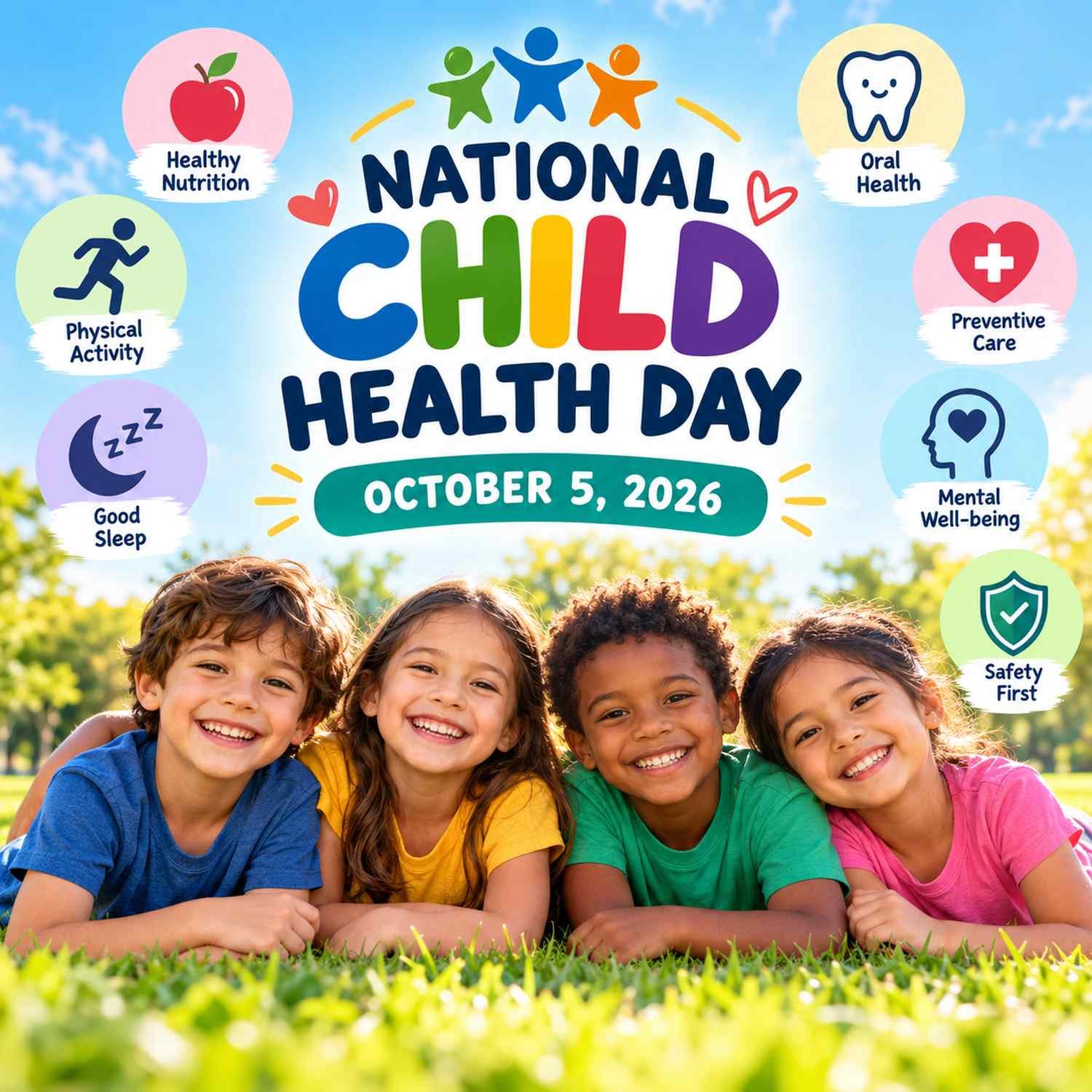
In 2026, National Child Health Day will be observed on Monday, October 5, 2026. The day can be used to learn about children’s health, review everyday habits, and encourage simple actions that support children’s well-being throughout the year.
When Is National Child Health Day 2026?
National Child Health Day 2026 will be observed on Monday, October 5, 2026.
The observance is held on the first Monday of October each year in the United States. Because it follows a weekday rather than a fixed date, the calendar date changes from year to year.
National Child Health Day is an annual observance, not a federal public holiday. Its purpose is to increase awareness of children’s health and encourage attention to the conditions that help children grow and develop.
What Is National Child Health Day?
National Child Health Day is an annual observance focused on children’s health, development, safety, and well-being.
It encourages people to consider the different factors that influence a child’s health. These include nutrition, physical activity, sleep, preventive healthcare, oral health, emotional well-being, personal safety, education, and supportive relationships.
Child health is broader than simply being free from disease. Children also need opportunities to develop physically, emotionally, socially, and mentally in safe and supportive environments.
For families, the day can be a reminder to review children’s daily routines. Schools and community organizations can use it to provide health education and organize activities that promote healthy habits.
History of National Child Health Day
Child Health Day has a long history in the United States. A congressional joint resolution in 1928 established an annual observance focused on children’s health and welfare.
The observance has continued to receive national recognition through presidential proclamations and other public health efforts. Over time, the understanding of child health has also expanded.
Earlier child-health efforts placed considerable emphasis on disease prevention and basic medical care. Today, child health is understood more broadly to include nutrition, physical activity, mental and emotional well-being, preventive care, safety, healthy development, and supportive environments.
The history of National Child Health Day reflects the continuing importance of children’s health as a public concern.
For More Information Read Here…
Why Is Child Health Important?
Childhood is an important period of physical, emotional, social, and cognitive development. Healthy habits and appropriate support can help children develop and participate fully in everyday life.
Good child health supports areas such as:
- Physical growth and development
- Learning and concentration
- Energy for daily activities
- Emotional development
- Social relationships
- School participation
- Healthy lifestyle habits
- Independence and confidence
Children have different needs depending on their age and development. Parents and caregivers should therefore use age-appropriate guidance and consult qualified healthcare professionals when they have specific health concerns.
Important Areas of Child Health
Several areas work together to support children’s overall health.
Physical Health
Physical health includes healthy growth, regular movement, nutritious food, hygiene, preventive care, and appropriate medical attention.
Families can support physical health by establishing consistent routines and encouraging children to participate in age-appropriate activities.
Healthy Nutrition
Children need a variety of nutritious foods to support growth and development. Meals can include fruits, vegetables, whole grains, protein-rich foods, and appropriate dairy or alternatives.
Water is also an important part of a healthy eating pattern.
Parents can encourage healthy eating by offering variety, maintaining regular meal routines, and involving children in simple food preparation.
Physical Activity
Regular movement is important during childhood. Children can stay active through outdoor play, walking, cycling, dancing, swimming, sports, and other activities suitable for their age and abilities.
Physical activity does not have to be formal exercise. Active play can be an enjoyable way for children to move and spend time with others.
Sleep
Adequate sleep supports children’s physical and emotional well-being. Children have different sleep needs depending on their age.
A consistent bedtime, a calm sleeping environment, and a regular daily routine can help children develop healthy sleep habits.
Oral Health
Good oral hygiene should begin early. Children should learn appropriate brushing habits and receive routine dental care according to professional recommendations.
Healthy eating habits and regular dental care also contribute to maintaining healthy teeth and gums.
Mental and Emotional Health
Children experience many emotions and may sometimes struggle to explain what they are feeling.
Parents, caregivers, and teachers can help by listening, encouraging communication, providing reassurance, and creating environments where children feel safe discussing their concerns.
The Importance of Preventive Healthcare
Children need healthcare not only when they are sick but also as part of routine prevention and monitoring.
Depending on the child’s age and individual needs, preventive care may include:
- Routine health checkups
- Growth and developmental monitoring
- Recommended vaccinations
- Vision and hearing screening
- Dental care
- Nutrition guidance
- Physical activity guidance
- Safety education
Parents should follow recommendations from their child’s healthcare professional because individual healthcare needs can vary.
Healthy Habits for Children
Families can encourage healthy habits without making daily routines complicated.
Some practical habits include:
- Eating a variety of nutritious foods
- Drinking water regularly
- Staying physically active
- Getting adequate sleep
- Practicing good personal hygiene
- Brushing teeth regularly
- Spending time outdoors
- Maintaining supportive relationships
- Talking openly about emotions
- Following appropriate safety practices
Children often learn by observing adults, so parents and caregivers can also model the habits they want children to develop.
Supporting Children’s Mental and Emotional Well-Being
Emotional well-being is an important part of child health. Children can experience stress related to school, friendships, family circumstances, bullying, and other situations.
Listen to Children
Give children time to explain their thoughts and feelings without immediately dismissing their concerns.
Encourage Communication
Regular conversations can help children feel comfortable discussing problems when they arise.
Maintain Consistent Routines
Predictable routines around school, meals, play, and sleep can provide children with structure.
Recognize Significant Changes
Persistent changes in mood, behavior, sleep, eating, school participation, or relationships may deserve attention. Parents and caregivers should seek appropriate professional advice when concerns arise.
Child Safety and Injury Prevention
Safety is another important part of children’s health. Parents and caregivers can teach children age-appropriate safety practices at home, school, outdoors, and online.
Important topics include:
- Seat-belt and child-restraint safety
- Bicycle and helmet safety
- Water safety
- Fire safety
- Safe storage of medicines
- Safe storage of household chemicals
- Playground safety
- Emergency preparedness
- Age-appropriate internet safety
Safety lessons should be adapted as children grow and develop new skills.
Role of Parents in Child Health
Parents and caregivers have a major role in establishing healthy daily routines.
They can:
- Provide nutritious meals
- Encourage physical activity
- Establish regular sleep routines
- Teach hygiene
- Maintain recommended healthcare appointments
- Listen to children’s concerns
- Support healthy relationships
- Create a safe home environment
Healthy routines do not need to be perfect. Consistent and realistic habits can be easier for families to maintain.
Role of Schools and Teachers
Schools also have an important role in supporting children’s health.
Schools can promote well-being through:
- Health education
- Physical education
- Hygiene education
- Safe facilities
- Nutritious food choices
- Anti-bullying programs
- Emotional wellness activities
- First-aid preparedness
- Opportunities for physical activity
Teachers can reinforce healthy habits while creating a respectful and supportive classroom environment.
How to Celebrate National Child Health Day 2026
National Child Health Day can be observed through simple activities at home, school, or in the community.
Prepare a Healthy Meal
Families can prepare a nutritious meal together and discuss different food choices.
Plan an Outdoor Activity
Take a walk, visit a playground, ride bicycles, or play an outdoor game.
Talk About Healthy Habits
Discuss sleep, nutrition, exercise, hygiene, and safety with children.
Review Home Safety
Check smoke alarms, medication storage, household chemicals, and other potential safety concerns.
Organize a School Activity
Teachers can arrange a health quiz, poster competition, outdoor activity, or classroom discussion.
Talk About Feelings
Give children an opportunity to talk about emotions, friendships, school, or other concerns.
National Child Health Day Activities for Schools
Schools can mark the day with educational and interactive activities.
Some ideas include:
- Health poster competition
- Child health quiz
- Healthy habits challenge
- Outdoor games
- Nutrition lesson
- Hygiene demonstration
- Safety-awareness session
- Emotional wellness discussion
- Healthy food activity
Activities should be appropriate for students’ ages and abilities.
National Child Health Day Activities for Families
Families can celebrate without organizing a large event.
Simple ideas include:
- Cooking a healthy meal together
- Going for a family walk
- Playing outdoors
- Visiting a playground
- Creating a family health checklist
- Reviewing home safety
- Having a screen-free activity
- Reading about healthy habits
- Talking about emotions
- Establishing a consistent bedtime routine
The purpose is to encourage healthy habits rather than make families feel pressured to change everything at once.
Simple Child Health Checklist
Use this checklist as a general reminder:
- ☐ Eat a variety of nutritious foods
- ☐ Drink water regularly
- ☐ Stay physically active
- ☐ Get adequate sleep
- ☐ Practice good oral hygiene
- ☐ Wash hands regularly
- ☐ Attend recommended healthcare appointments
- ☐ Follow recommended vaccination guidance
- ☐ Spend time with family and friends
- ☐ Talk about emotions
- ☐ Practice age-appropriate safety
- ☐ Maintain healthy screen habits
This checklist is for general awareness and does not replace professional medical advice.
Why National Child Health Day Still Matters
Children’s health depends on several factors working together. Nutritious food, physical activity, sleep, preventive healthcare, emotional support, education, and safety all contribute to children’s well-being.
National Child Health Day provides an opportunity to consider whether children have the support and resources they need to grow and develop.
The observance is also a reminder that children’s health should receive attention throughout the year, not only on one particular day.
Frequently Asked Questions About National Child Health Day 2026
When is National Child Health Day 2026?
National Child Health Day 2026 will be observed on Monday, October 5, 2026. It falls on the first Monday of October.
What is National Child Health Day?
It is an annual U.S. observance that highlights children’s health, development, safety, and overall well-being.
Why is National Child Health Day observed?
The observance raises awareness of children’s health and encourages families, schools, healthcare professionals, and communities to support healthy childhood development.
What are some National Child Health Day activities?
Popular activities include healthy cooking, outdoor games, health quizzes, poster competitions, hygiene lessons, safety activities, and discussions about emotional well-being.
How can parents celebrate National Child Health Day 2026?
Parents can prepare a healthy meal, spend time being active with their children, discuss healthy habits, review safety practices, and make sure routine healthcare needs are addressed.
How can schools celebrate Child Health Day?
Schools can organize health quizzes, poster contests, physical activities, nutrition lessons, hygiene demonstrations, and age-appropriate wellness discussions.
What are the main areas of child health?
Key areas include physical health, nutrition, physical activity, sleep, oral health, preventive healthcare, mental and emotional well-being, social development, and safety.
Is National Child Health Day a federal holiday?
No. It is an annual observance rather than a federal public holiday that generally provides a day off from work.
Final Thoughts
National Child Health Day 2026 on October 5 is a useful opportunity to focus on children’s health and well-being.
Healthy childhood involves more than preventing illness. Nutritious food, physical activity, adequate sleep, good hygiene, preventive healthcare, emotional support, and safe environments all have an important role.
Families, schools, healthcare professionals, and communities can use the day to review healthy habits and identify practical ways to support children.
A healthy family meal, outdoor activity, health lesson, safety check, or simple conversation about feelings can all be meaningful ways to observe the day.
Most importantly, the message of National Child Health Day should continue throughout the year: children need consistent care, support, safety, and opportunities to develop healthy habits as they grow.